

How to Write a Haiku with AI
I pointed poma at a photo of my coffee this morning. It wrote a haiku about the steam. I wouldn't have described the steam that way, but the poem noticed something I didn't.
That's what I find interesting about it. You have a photo, poma looks at it and writes an AI poem based on what it sees. Here's how it works - and what people are actually using it for.
What's a haiku, quickly
A haiku is three lines. That's it. The form started in 17th-century Japan - Matsuo Basho, the poet most people associate with haiku, used it to capture one small moment. A frog jumping into a pond. Snow on a branch. The whole point was to notice something specific, hold it in a few words, and stop.
The traditional structure is 5-7-5 syllables, but that's actually a simplification of how it works in Japanese. What matters more is the moment - one image, one feeling, no extra words.
Today the form has spread everywhere. Poets use haiku for everything from nature to social commentary to humor. But the core hasn't changed: a haiku works because it's short enough to say one thing clearly.
Turns out, that's exactly what a photo already does.
How poma writes a haiku from your photo
Most AI poetry generators give you text in a box. You type a prompt, you get a poem, you copy-paste it somewhere. poma works differently - it starts with your photo, writes the poem from what it sees, and puts the AI poem right on the image. The result is a single thing you can send, print, or post. Not a poem in one place and a photo in another.
Open the app. Take a photo or pick one from your camera roll. Choose haiku. poma looks at the image, finds a detail, and writes three lines about it.
7 ways to actually use an AI haiku
This is where it gets interesting. I assumed people would use poma's haiku mode for nature shots. They don't. Here's what people actually point it at - and what happens.
For your mom's birthday
You already have the photo. Her garden, her hands, the flowers you bought her, the kitchen she's always in. Point poma at it and see what it notices.
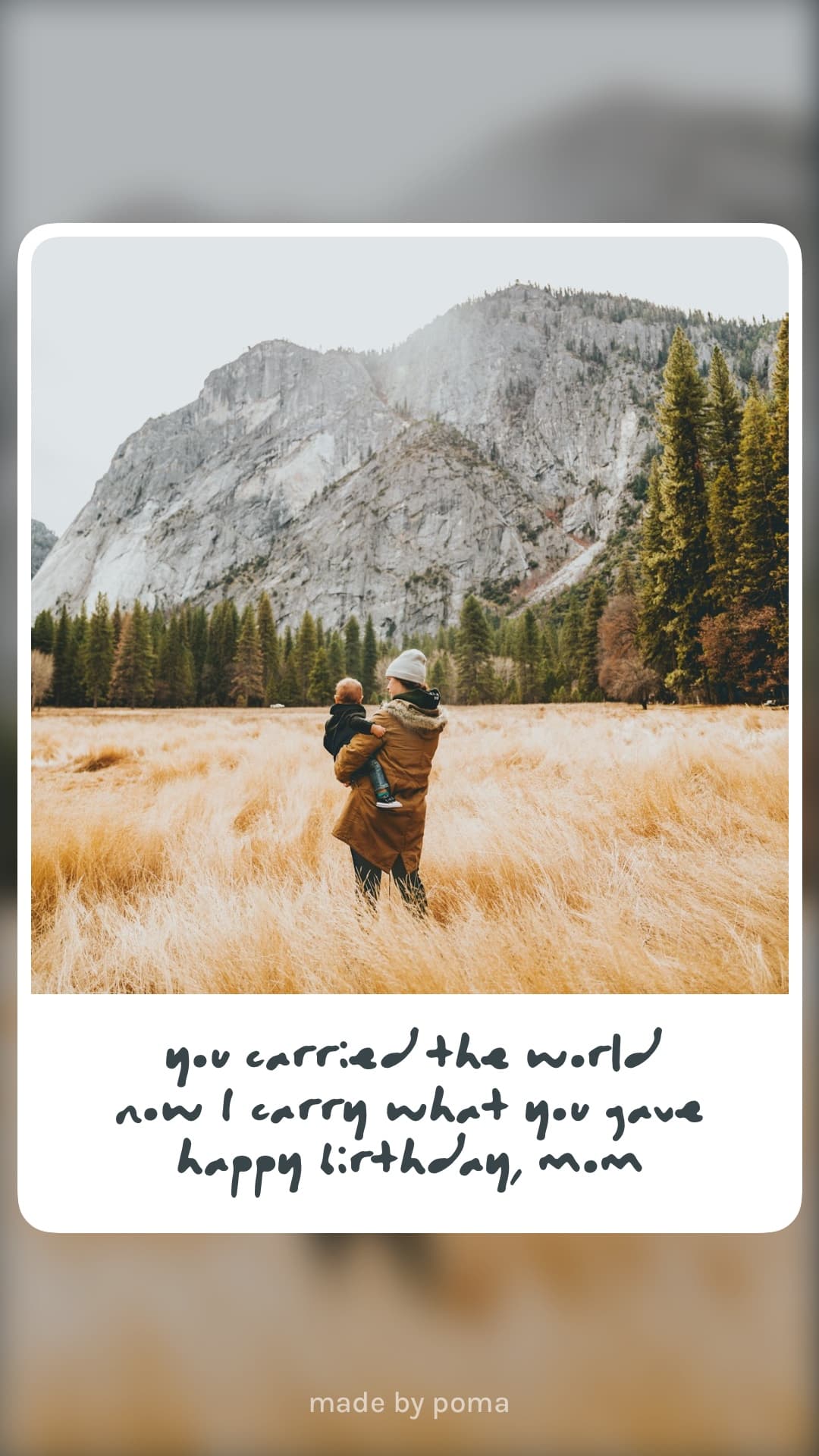
you carried the world now I carry what you gave happy birthday, mom
Three lines on a birthday card hit different when they're about something specific to her - not a generic "Happy Birthday" poem from Google.
For your kid
Kids are chaos. That's what makes the haiku good - poma notices the small thing in the mess. The costume they won't take off. The way they lean into each other. The details you'll forget if you don't hold them somewhere.
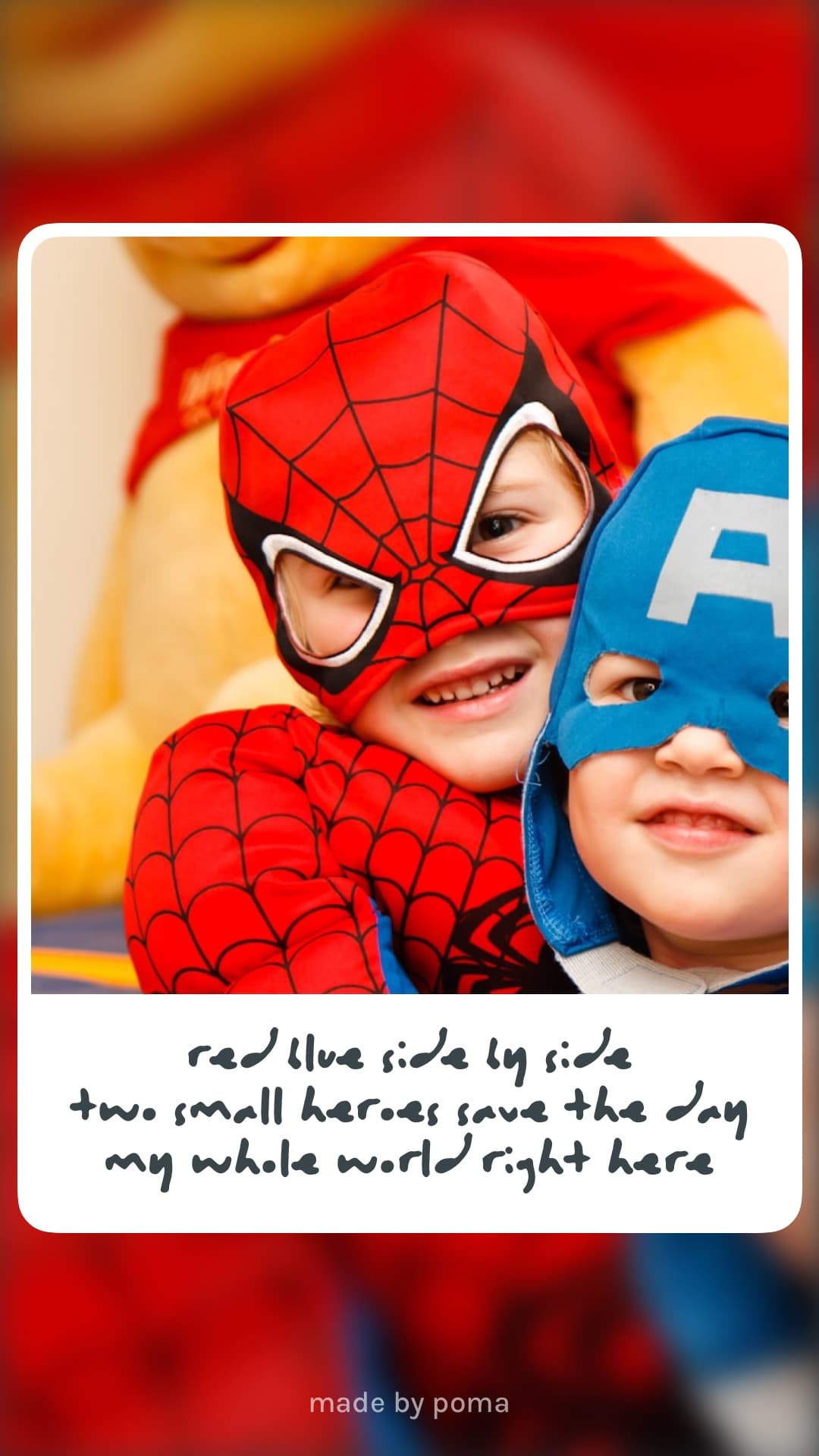
red blue side by side
two small heroes save the day
my whole world right here
These are the ones parents text to each other at 11pm. Or put in a baby book. Or just keep.
When you're traveling
You're standing somewhere beautiful and your caption is "Amazing view." A haiku says something more specific. It picks out one detail - the duck on the water, the reflection of the mountains, the stillness you actually felt standing there.
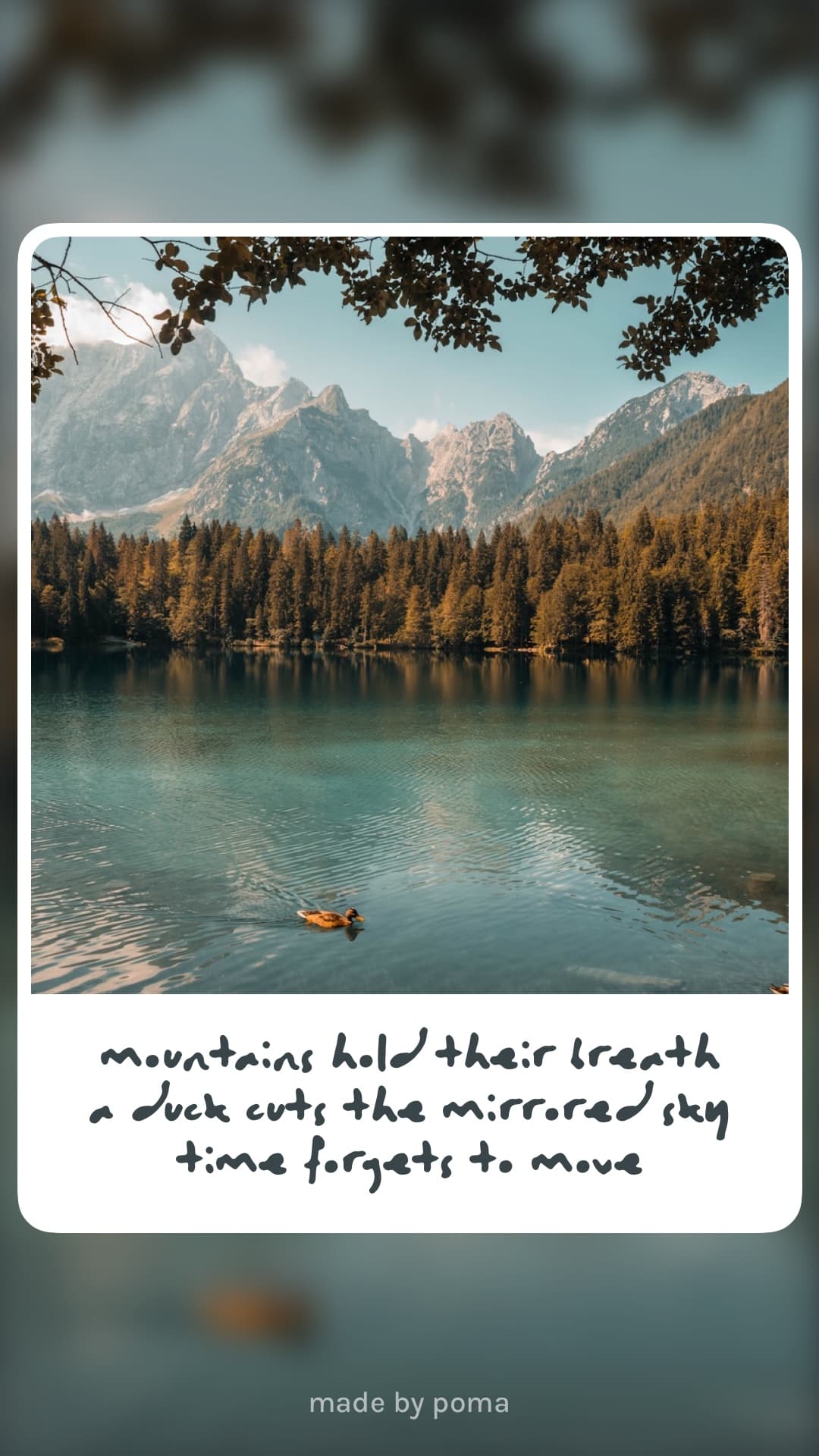
mountains hold their breath
a duck cuts the mirrored sky
time forgets to move
Better than a caption. Short enough for Instagram. Specific enough to actually remember the moment later.
For someone you miss
A photo of her kitchen. The teapot still on the stove. The floral tiles she picked out. A place you used to sit together. poma doesn't know the backstory, but it notices the details - and sometimes those details are exactly what you're feeling.
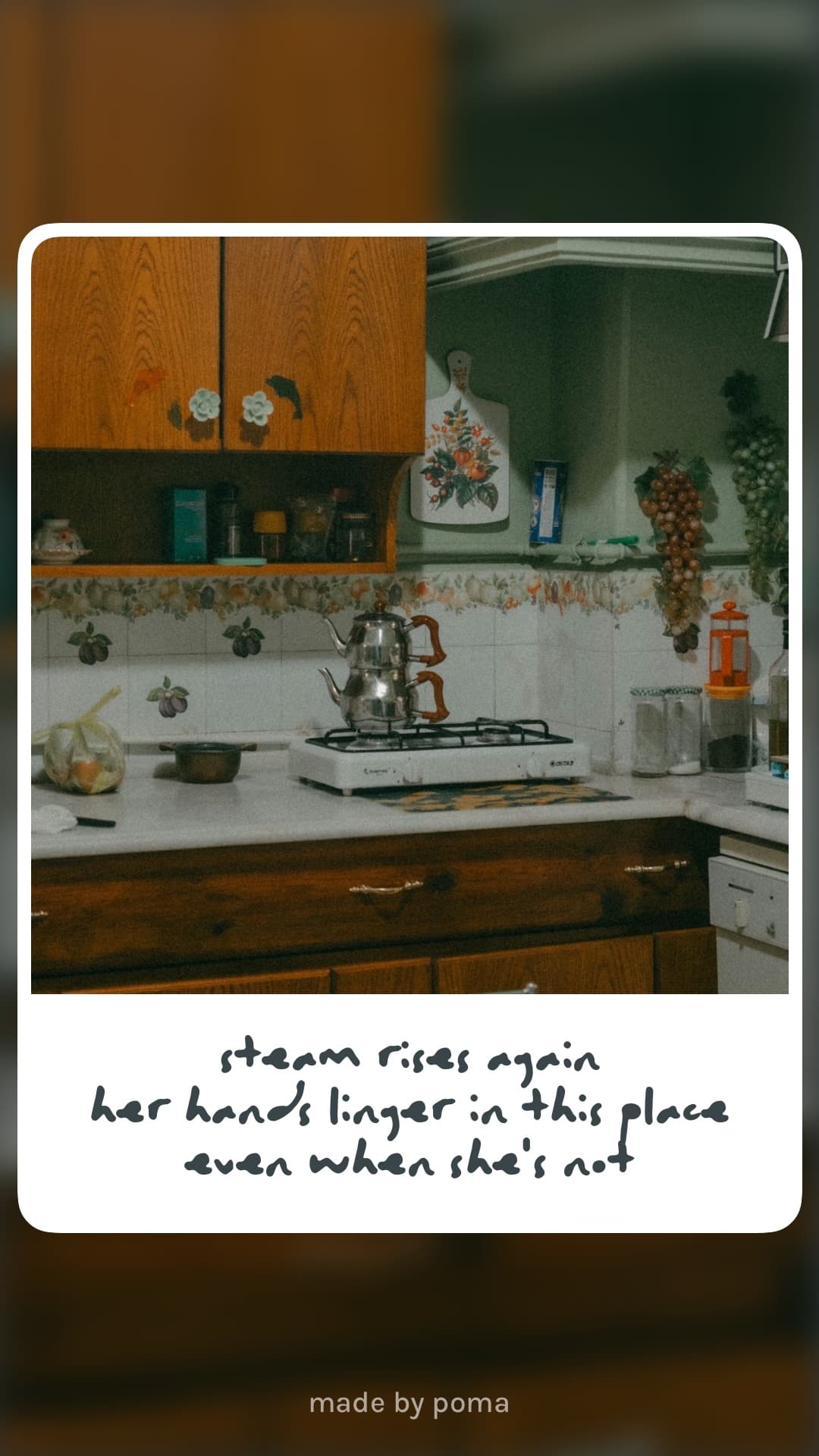
steam rises again
her hands linger in this place
even when she's not
I'm not going to pretend AI understands grief. It doesn't. But three lines about a kitchen where someone used to be can still land.
For something totally mundane
This is actually my favorite use. A door. A shadow on the floor. A crack in the sidewalk. The boring photos usually make the most surprising haiku because poma has to find something - and it finds things you wouldn't.
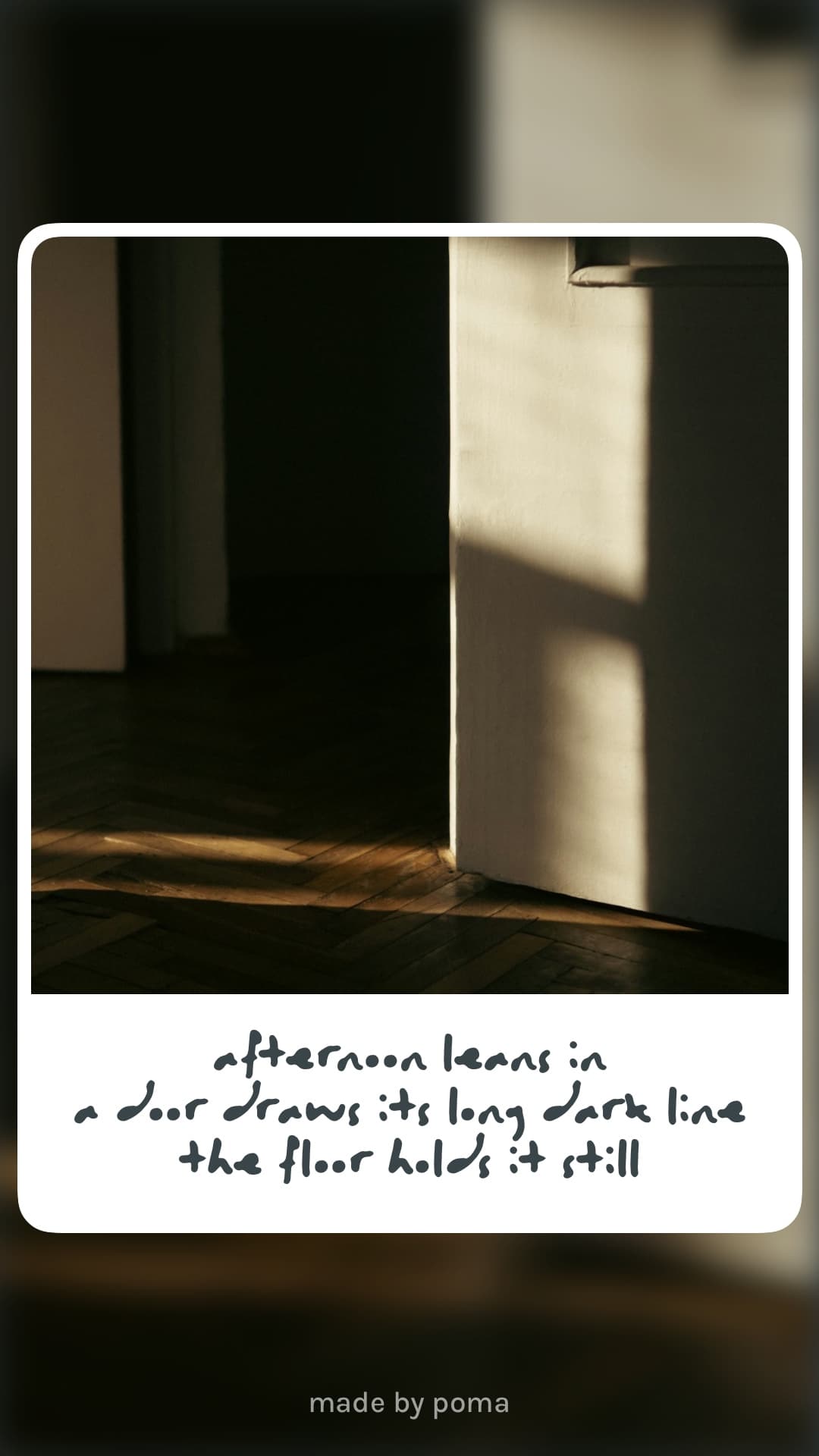
afternoon leans in
a door draws its long dark line
the floor holds it still
The haiku poma writes about nothing are weirdly good. Try a doorway, a shadow, a crack in the wall.
As a thank you
Instead of "Thanks so much!" - take a photo of the people who showed up. The group selfie, the dinner they cooked, the place they took you. Let poma write a haiku about it. Text it to them.

you showed up for me
all the noise and warmth of it
I won't forget this
Sometimes the haiku finds the right words when you can't.
For your pet
I'll be honest, the pet haiku are the ones people share the most. A cat sprawled in the garden. A dog on the couch. A fish doing absolutely nothing. poma finds the comedy in it without trying to be funny.
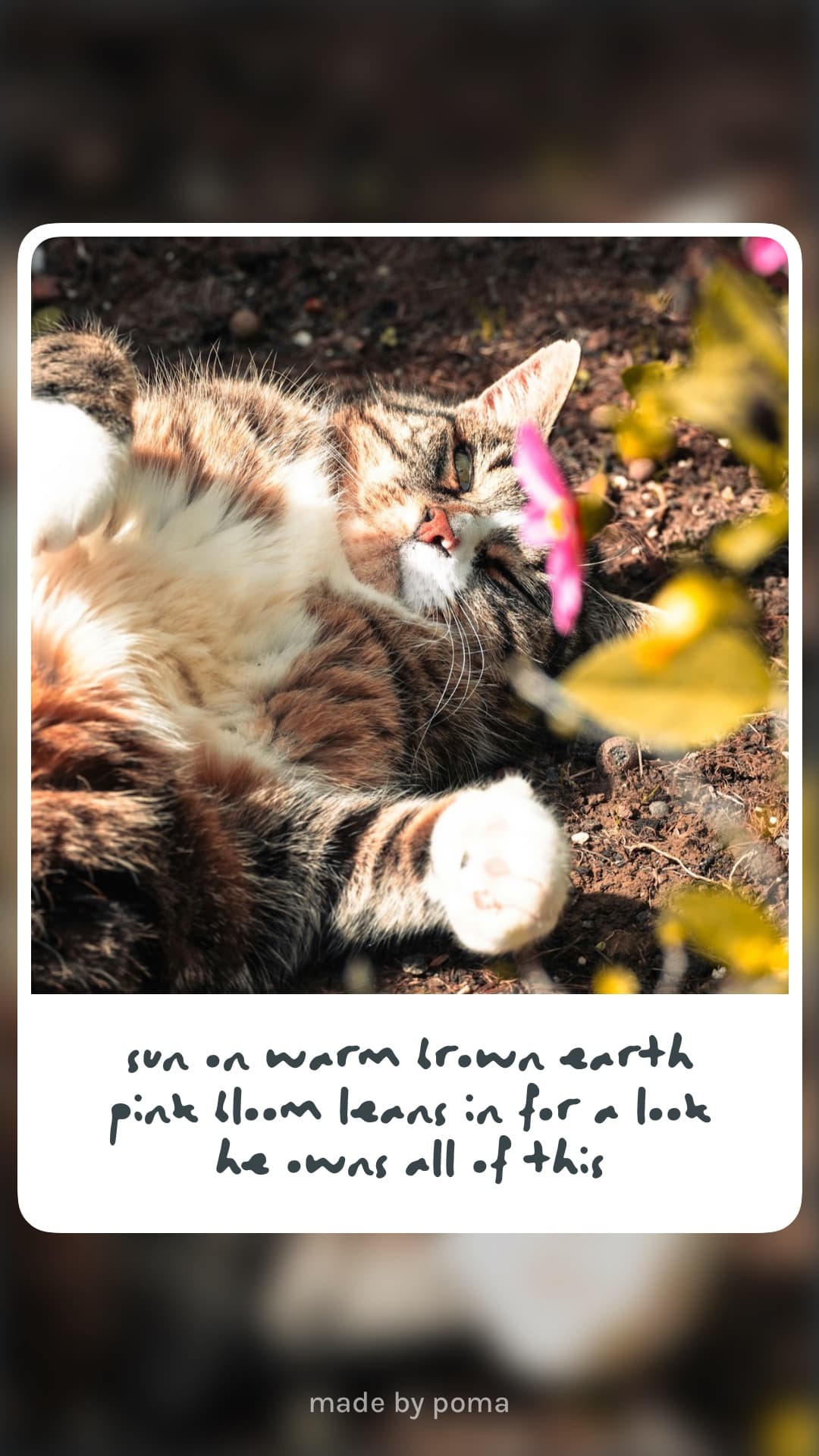
sun on warm brown earth
pink bloom leans in for a look
he owns all of this
These work for Instagram, for printing on your fridge, for texting to your group chat. They're low-stakes and that's the point.
Why haiku works for this
A haiku is three lines about one moment. A photo is one moment. poma puts them together so the poem lives on the image, not in a separate text box somewhere. You end up with a single thing you can send, print, or post - the photo and the words belong to each other.
That's what makes it different from copying a poem off the internet and pasting it into a card. The haiku is about that photo. Your mom's kitchen, your kid in that costume, that lake you stood next to. Basho wrote about frogs and snow. You're writing about what's already on your phone.
Open your camera roll. Find the photo. See what poma writes.